
Does Gold-Plated Jewelry Tarnish? What to Expect
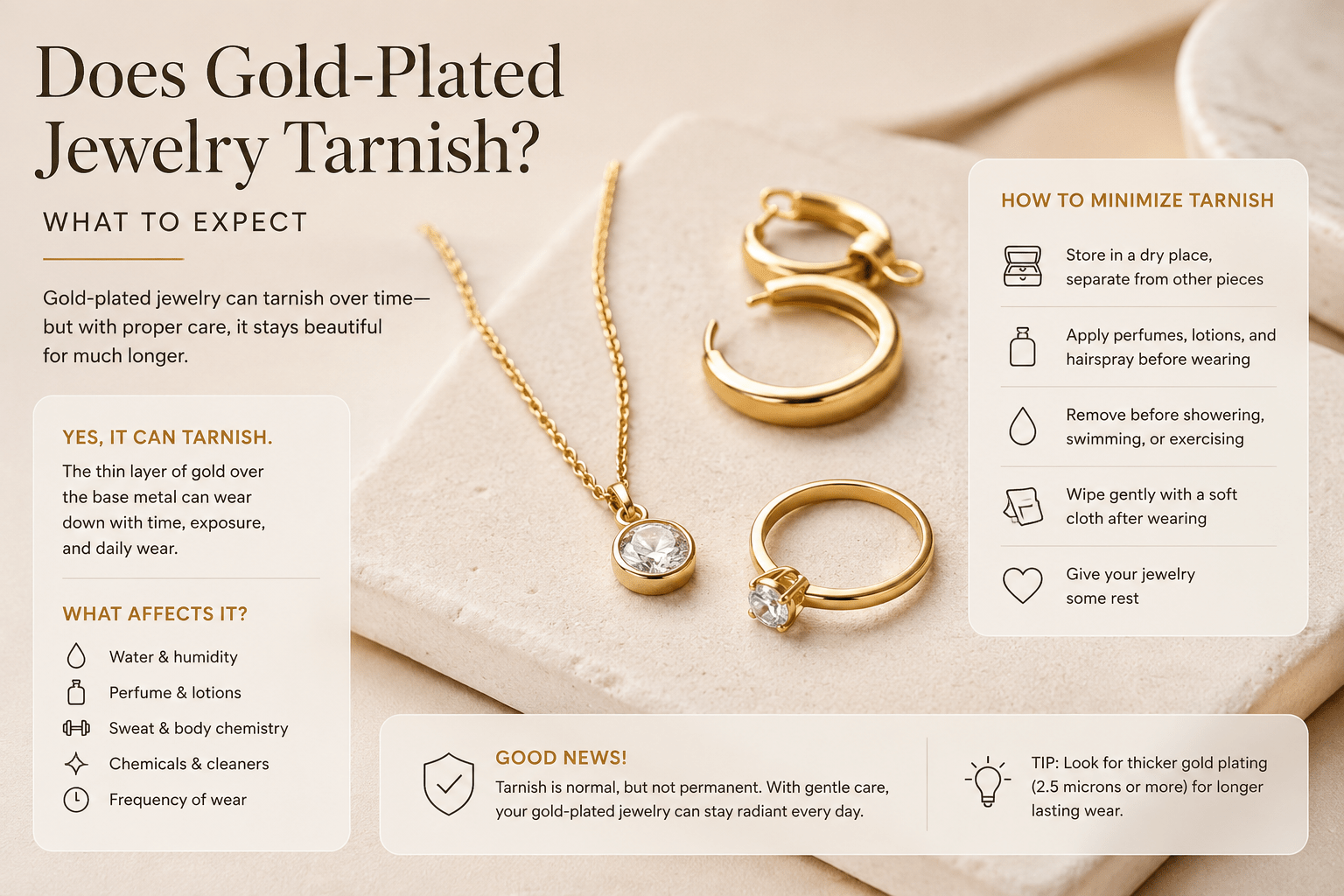
Quick answer: Gold-plated jewelry can lose some brightness or show gradual color change over time, but that is often better described as finish wear than the gold itself tarnishing. The gold layer can become thinner through friction and exposure to chemicals, allowing the base metal or surface buildup to affect the appearance. La Vie en Rose gold-plated pieces use stainless steel and are designed to resist everyday tarnish with proper care.
Gold-plated jewelry offers the warmth of a gold finish without the price of solid gold, but it is still important to understand how that finish behaves. This guide explains what tarnish looks like, how it differs from fading or buildup, and what to expect from 18K gold-plated stainless steel jewelry.
Table of Contents
- Does gold-plated jewelry tarnish?
- Tarnish, fading, and buildup
- What to expect from La Vie en Rose jewelry
- What speeds up finish wear?
- How to help the finish last
- Frequently asked questions
Does Gold-Plated Jewelry Tarnish?
Gold-plated jewelry can develop a dull, faded, or discolored appearance over time. The Federal Trade Commission explains that gold plating eventually wears away, with the rate depending on how the item is worn and the thickness of the plating.
That does not always mean the gold layer itself has chemically tarnished. In many cases, the visible change comes from surface buildup, gradual thinning of the finish, or exposure of the base metal beneath it. This distinction matters because each issue calls for a different response.
Tarnish, Fading, and Buildup Are Not the Same
| What you see | Likely cause | What to do |
|---|---|---|
| Dull or cloudy surface | Skin oils, lotion, perfume, or product buildup | Wipe gently with a soft, dry cloth |
| Lighter or uneven gold color | Gradual plating wear from friction or frequent use | Avoid abrasive cleaning and reduce exposure |
| Darkening in worn areas | Exposed base metal or accumulated residue | Stop aggressive cleaning and assess the finish |
| Fine scratches | Contact with clothing, surfaces, or other jewelry | Store pieces separately in a lined box or pouch |
A gentle wipe may remove buildup, but cleaning cannot replace a gold layer that has worn thin. Abrasive cloths, jewelry dips, and harsh cleaners can make plating wear faster.
What to Expect From La Vie en Rose Gold-Plated Jewelry
La Vie en Rose gold-plated jewelry uses 18K yellow gold over a stainless steel base. Stainless steel is selected for its durable, corrosion-resistant structure, while the plated surface provides the warm gold appearance.
These pieces are treated to resist everyday tarnish and are water-resistant for normal use such as handwashing, light rain, and sweat. Tarnish-resistant does not mean the finish is permanent or unaffected by chlorine, salt water, perfume, lotion, prolonged water exposure, or repeated friction.
Always check the individual product page before wearing or cleaning a piece. Jewelry featuring pearls follows different care guidance and does not carry the same water-resistant or tarnish-resistant claims.
What Speeds Up Gold-Plated Finish Wear?
- Friction: Rings, bracelets, and layered chains receive more repeated contact than pieces worn with less movement.
- Chlorine and salt water: Swimming can accelerate damage to a plated finish.
- Perfume, lotion, sunscreen, and hairspray: Product residue can dull the surface and contribute to finish wear.
- Household cleaners: Harsh chemicals can damage or discolor metals and plated surfaces.
- Frequent wear: A piece worn daily will usually show normal wear sooner than one rotated with other jewelry.

How to Help Gold-Plated Jewelry Keep Its Shine
- Put jewelry on after perfume, lotion, sunscreen, and hairspray.
- Remove it before showering, swimming, exercising, or prolonged water exposure.
- Wipe it gently with a soft cloth after wearing.
- Store each piece separately in a dry pouch or lined jewelry box.
- Avoid abrasive polishing products, silver dips, and ultrasonic cleaners unless the product page specifically allows them.
For a complete routine, read our guide to caring for 18K gold-plated jewelry. To understand how plating differs from vermeil, see our gold-plated vs. gold vermeil comparison.
Normal Wear or a Product Problem?
Slight dulling, fine surface scratches, or gradual color change after regular wear can be normal for plated jewelry. These changes are different from a manufacturing issue such as a faulty clasp, defective chain, or loose stone.
If a recently purchased piece changes unexpectedly, review the care guidance and contact customer support with the order number and clear photos. This helps determine whether the issue is surface buildup, normal wear, accidental damage, or a possible covered defect.
Gold-Plated Styles Designed for Everyday Rotation
Rotating several pieces can reduce repeated wear on one favorite. The Odette Gold Necklace offers a polished paperclip-link silhouette, while the Gabriela Gold Tennis Bracelet adds a continuous line of white CZ simulated diamond stones. For a classic hoop, the Rosalind Gold Hoop Earrings provide a clean, high-polish shape.
Each of these styles is made with an 18K gold-plated stainless steel construction. Explore the full 18K Gold-Plated Stainless Steel collection to build a rotation that fits your everyday style.
Frequently Asked Questions
Does 18K gold-plated stainless steel tarnish?
It is designed to resist everyday tarnish, but the plated finish can still dull, fade, or change gradually with frequent wear, friction, chemicals, and prolonged moisture exposure. Stainless steel provides a corrosion-resistant base, but it does not make the surface coating permanent.
Can I shower with gold-plated jewelry?
La Vie en Rose recommends removing gold-plated jewelry before showering, swimming, exercising, or prolonged water exposure. Occasional contact from handwashing or light rain is different from repeated soaking, chlorine, salt water, and personal-care products.
How long does gold-plated jewelry last?
There is no reliable universal lifespan. The result depends on plating thickness, frequency of wear, friction, moisture, chemicals, storage, skin chemistry, and the design of the piece. Jewelry worn in rotation and stored carefully generally experiences less repeated exposure than a piece worn continuously.
Can faded gold plating be restored at home?
A soft cloth can remove oils or surface buildup, but it cannot replace gold that has worn away. Avoid aggressive polishing or chemical dips. If the finish has become thin or uneven, professional assessment or replating may be required.
Sources
- Federal Trade Commission, Buying Platinum, Gold, and Silver Jewelry
- Gemological Institute of America, Tips on Caring for Jewelry
- La Vie en Rose Jewelry, Materials & Quality
Choose Gold-Plated Jewelry With Clear Material Details
The most useful product description identifies the base metal, finish, and care guidance. Browse La Vie en Rose's 18K Gold-Plated Stainless Steel collection for refined pieces designed to resist everyday tarnish with proper care.
Written by Jose Lejarza